Source Computer Control Microwave Network Analyzer for RF Testing
Compare 30 models of computer control microwave network analyzer from global suppliers. These devices support frequency ranges up to 50 GHz and offer dual-source or four-source configurations for precise S-parameter measurements in telecommunications and radar applications.
Key considerations
Products List




Comprehensive Sourcing Guide
Strategic Sourcing Guide for Computer-Controlled Microwave Network Analyzers
Understanding the Technical Landscape of Microwave Network Analysis
The procurement of a computer-controlled microwave network analyzer requires a precise understanding of the instrument's core capabilities, which define its utility in high-frequency engineering environments. These devices are engineered to measure the electrical characteristics of networks, specifically focusing on S-parameters, Z-parameters, and balance parameters. The operational frequency range is a primary determinant of suitability, with observed market offerings spanning from 10 MHz up to 43.5 GHz, and extending further to 50 GHz in specialized configurations. Buyers must distinguish between models designed for general-purpose testing and those capable of handling the upper limits of microwave spectrum analysis.
A critical technical differentiator is the dynamic range, which indicates the analyzer's ability to distinguish between strong and weak signals. High-performance units in this category typically boast a dynamic range of at least 130 dB, ensuring that minute signal variations are captured accurately without being obscured by noise. Complementing this is the trace noise specification, where advanced systems demonstrate a trace noise floor of ≤0.001 dB, a metric essential for high-precision measurements in low-signal environments. The measurement modes available further expand the utility of these analyzers, supporting time-domain, pulse, gain compression, and frequency-based analysis. This versatility allows engineers to characterize components under various operational conditions, from steady-state frequency sweeps to transient pulse responses.
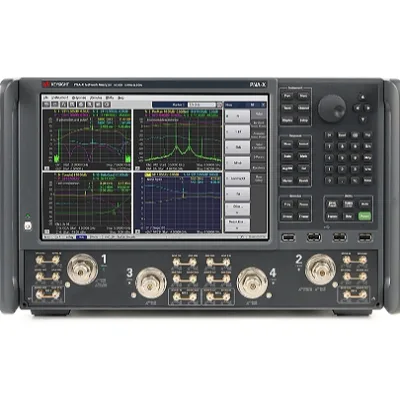
The display and data presentation capabilities are equally vital for effective operation. Modern analyzers utilize digital display formats that include Smith Charts, Polar plots, Log Magnitude, Linear Magnitude, and Phase representations. This flexibility allows technicians to visualize complex impedance and reflection data in the most intuitive format for their specific application. Furthermore, the sweep mode options, ranging from fast continuous sweeps to step sweeps, provide the necessary control over measurement speed and resolution. The port configuration is another area requiring careful selection, with options available for dual-source 2-port setups or four-source 4-port configurations, depending on the complexity of the device under test.
Compliance, Certification, and Regulatory Standards
When sourcing industrial-grade electronic test equipment, verifying compliance with international quality management systems is a non-negotiable step. The supply chain for microwave network analyzers often includes products that adhere to ISO9001 certification, indicating a commitment to consistent quality management processes. Additionally, the presence of CCC (China Compulsory Certification) on specific models suggests that the equipment meets the mandatory safety and performance standards required for sale and operation within the Chinese market, which is a significant hub for the manufacturing of such instrumentation.
Beyond general quality certifications, buyers must scrutinize the physical and operational standards that govern the equipment. The structural integrity of these analyzers is often defined by their housing, which frequently utilizes an aluminum-alloy metal chassis. This material choice is not merely aesthetic; it provides the necessary shielding against electromagnetic interference (EMI) and ensures the device can withstand the rigors of a laboratory or field environment. The protection mechanisms are equally critical, with anti-static features being a standard attribute to prevent damage to sensitive internal components from electrostatic discharge.
Standardization also extends to the physical dimensions and packaging of the units. Observed specifications indicate standard dimensions of approximately 254×140×360mm for certain models, ensuring compatibility with standard rack-mount installations or desktop setups. The packaging standards are equally rigorous, typically involving standard export cartons lined with EPE foam to mitigate shock and vibration during transit. Buyers should verify that the supplier's packaging protocols align with these standards to ensure the instrument arrives in pristine condition. It is also essential to confirm the origin of the product, as manufacturing locations such as Chengdu, Sichuan, China, or Germany may influence the specific regulatory compliance framework and after-sales support structure available to the buyer.
Cost Drivers and Procurement Economics
The pricing of computer-controlled microwave network analyzers is highly variable, reflecting the vast differences in frequency range, dynamic range, and port configuration. The observed market price range spans from approximately $17 to $210,000 USD. This wide disparity is not indicative of a single product line but rather a spectrum of capabilities. Lower-cost units may be limited to specific frequency bands or lack advanced calibration features, while high-end models capable of 50 GHz operation with full two-port calibration and electronic calibration capabilities command premium prices.
Several factors drive these costs. The frequency range is a primary cost driver; extending the operational bandwidth from 26.5 GHz to 50 GHz requires significantly more expensive components and tighter manufacturing tolerances. Similarly, the dynamic range and trace noise specifications directly correlate with the cost of the internal signal generators and receivers. Units offering a dynamic range of ≥130 dB and trace noise of ≤0.001 dB require high-precision engineering that increases the base manufacturing cost. The port configuration also impacts pricing, with four-source 4-port systems generally costing more than dual-source 2-port systems due to the increased complexity of the internal switching and calibration networks.
Minimum Order Quantities (MOQ) and customization options further influence the total cost of ownership. The observed MOQ range for these products is typically between 1 and 10 units, offering flexibility for both individual laboratories and larger procurement teams. However, the availability of OEM/ODM customization can alter the pricing structure. While standard models are readily available, custom configurations may incur additional engineering fees and longer lead times. Buyers should also consider the power source requirements, as units operating on AC110V may have different power supply costs compared to those requiring different voltage standards.
Typical Applications and Operational Environments
The versatility of computer-controlled microwave network analyzers makes them indispensable across a broad spectrum of industries. The primary application lies in the characterization of radio frequency (RF) and microwave components, including amplifiers, filters, antennas, and transmission lines. The ability to measure S-parameters allows engineers to determine the insertion loss, return loss, and phase response of these components, which is critical for ensuring they meet design specifications in telecommunications and radar systems.
In the realm of research and development, these analyzers are used to validate new materials and devices. The time-domain and pulse measurement modes are particularly valuable for analyzing the transient response of high-speed digital circuits and microwave devices. The gain compression measurement mode is essential for characterizing the linearity of power amplifiers, ensuring they can handle high-power signals without distortion. The availability of electronic calibration supports the high-accuracy requirements of modern R&D environments, where even minor measurement errors can lead to significant design failures.
The installation flexibility of these units, supporting both desktop and rack-mount configurations, allows them to be integrated into various laboratory setups. The remote control interfaces, including USB, LAN, and GPIB, facilitate automation and integration into larger test systems. This connectivity is crucial for high-volume production testing, where the analyzer must communicate with a central computer to log data, control the sweep parameters, and generate reports automatically. The digital display formats, such as the Smith Chart and Polar plots, provide immediate visual feedback, aiding in rapid troubleshooting and analysis during the development process.
Supplier Evaluation and Quality Assurance
Evaluating potential suppliers for microwave network analyzers requires a multi-faceted approach that goes beyond simple price comparison. Buyers must assess the supplier's ability to provide technical support, calibration services, and spare parts. The presence of computer control features implies a need for robust software support and compatibility with various operating systems. Suppliers should demonstrate a clear track record of supporting the specific models they offer, including the provision of necessary drivers and software updates.
Quality control is paramount when dealing with high-frequency instruments. Buyers should verify that the supplier adheres to strict manufacturing standards, such as ISO9001, and that the products undergo rigorous testing before shipment. The observation of specific model numbers, such as the VN5000A series or N5234B, indicates that buyers should request detailed datasheets and test reports for these specific units. It is also important to verify the origin of the product, as manufacturing locations like Chengdu or Germany may have different quality control cultures and regulatory oversight.
The packaging and shipping standards are also indicators of supplier reliability. A supplier that uses standard export cartons with EPE foam lining demonstrates a commitment to protecting the equipment during transit. Buyers should also inquire about the lead times and the availability of the product in the market. The observed selling units as single items suggest that the market is responsive to individual purchases, but buyers should confirm the availability of bulk orders if their needs require multiple units. Finally, the supplier's willingness to support customization requests, such as OEM/ODM modifications, is a strong indicator of their technical capability and customer service orientation.
Long-Term Procurement and Lifecycle Management
Procuring a microwave network analyzer is a long-term investment that requires careful consideration of the total cost of ownership. Beyond the initial purchase price, buyers must account for the costs associated with calibration, maintenance, and potential upgrades. The electronic calibration capabilities of these analyzers suggest that they may require periodic recalibration to maintain their specified accuracy. Buyers should establish a relationship with a supplier that offers reliable calibration services and has the necessary equipment to perform these tasks.
The lifespan of the instrument is another critical factor. The use of aluminum-alloy metal chassis and anti-static protection suggests that these units are built for durability. However, the internal components, such as the signal generators and receivers, may have a finite lifespan and may require replacement or repair over time. Buyers should inquire about the availability of spare parts and the expected service life of the instrument. The remote control interfaces, including USB, LAN, and GPIB, also indicate that the instrument is designed for integration into evolving test systems, which may require software updates or hardware upgrades in the future.
Furthermore, the customization options available, such as OEM/ODM support, can extend the lifecycle of the instrument by allowing it to be adapted to new requirements. Buyers should consider the flexibility of the system to accommodate future technological advancements. The weight of the instrument, typically ranging from 0 to 100 kg, and the loading method, whether mechanical or electronic, should also be considered in the context of the laboratory's infrastructure. Ensuring that the facility can support the weight and power requirements of the analyzer is essential for its long-term operation.
Comparative Analysis of Key Specifications
To assist buyers in making informed decisions, the following table summarizes the key specifications observed in the market for computer-controlled microwave network analyzers. This comparison highlights the variations in frequency range, dynamic range, and port configurations that are critical for selecting the right instrument for specific applications.
| Specification Category | Model Variant A (VN5000A-F43) | Model Variant B (VN5000A-F50) | Model Variant C (VN5000A-PL2) |
|---|---|---|---|
| Frequency Range | 10 MHz ~ 43.5 GHz | 10 MHz ~ 50 GHz | 10 MHz ~ 26.5 GHz |
| Dynamic Range | ≥130 dB | ≥130 dB | ≥130 dB |
| Trace Noise | ≤0.001 dB | ≤0.001 dB | ≤0.001 dB |
| Port Configuration | Dual-Source 2-Port | Four-Source 4-Port (Optional) | Dual-Source 2-Port |
| Calibration Type | Single-Port / Full-Two-Port | Electronic Calibration | Single-Port / Full-Two-Port |
| Measurement Mode | Time-Domain / Pulse / Gain Compression | Time-Domain / Pulse / Gain Compression | Time-Domain / Pulse / Gain Compression |
| Display Format | Smith Chart / Polar / Log Mag | Smith Chart / Polar / Log Mag | Smith Chart / Polar / Log Mag |
| Housing Material | Aluminum-Alloy Metal Chassis | Aluminum-Alloy Metal Chassis | Aluminum-Alloy Metal Chassis |
| Remote Interface | USB, LAN, GPIB | USB, LAN, GPIB | USB, LAN, GPIB |
This table illustrates that while the core measurement capabilities remain consistent across different models, the frequency range and port configuration are the primary differentiators. Buyers must align these specifications with their specific testing requirements to ensure optimal performance and cost-effectiveness. The consistent presence of high dynamic range and low trace noise across all variants indicates a high baseline of quality in this product category.
FAQs
What frequency ranges are available for computer control microwave network analyzers?
Available frequency ranges span from 10 MHz up to 50 GHz depending on the specific model selected. Units like the VN5000A-F43 cover 43.5 GHz, while the VN5000A-F50 extends to 50 GHz for high-frequency applications.
Which certifications do these analyzers typically hold for quality assurance?
These analyzers typically hold ISO9001 and CCC certifications to ensure quality and safety compliance. The ISO9001 standard confirms consistent quality management processes, while CCC indicates meeting mandatory Chinese market safety standards.
Can I customize the specifications of a computer control microwave network analyzer?
Yes, OEM and ODM customization is supported for these analyzers to meet specific engineering needs. Buyers can request tailored configurations, though this may affect lead times and pricing compared to standard models.
How is the dynamic range performance defined for high-end models?
High-performance units typically boast a dynamic range of at least 130 dB for accurate signal distinction. This metric ensures that minute signal variations are captured without being obscured by background noise in low-signal environments.
What remote control interfaces are supported for system integration?
Supported remote control interfaces include USB, LAN, and GPIB for flexible system integration. These connections facilitate automation and allow the analyzer to communicate with central computers for data logging and automated testing.
What is the typical minimum order quantity for purchasing these units?
The typical minimum order quantity ranges from 1 to 10 units depending on the supplier. This flexibility allows both individual laboratories and larger procurement teams to acquire the necessary equipment without excessive bulk commitments.
Where are these analyzers typically manufactured and shipped from?
These analyzers are typically manufactured in locations such as Chengdu, Sichuan, China, or Germany. The origin influences the regulatory compliance framework and the specific after-sales support structure available to the buyer.